

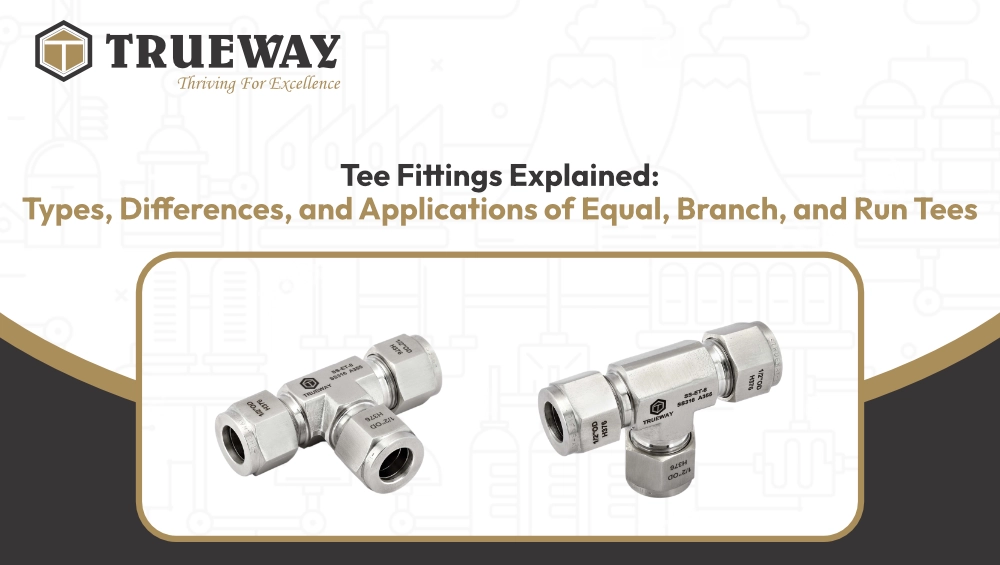
Tee fittings are an important and vital part of piping and hydraulics. They are used to direct fluid flow in multiple directions within a network. They are used to connect the pipes, divide flow between outlets or combine streams, depending upon the system design. The appropriate tee fitting helps in the effective flow management, reliable connections and safe operation.
Knowledge of the differences between equal tees, branch tees and female run tee helps engineers, technicians and purchasers to decide the appropriate components to use in their applications.
What Is a Tee Fitting?
A tee fitting is a T-shaped connector that has three openings connecting three sections of pipes or tubes. It normally has two openings on the main line with a single branch connection at approximately 90 degrees.
The Tee fittings come in various sizes, materials and connection styles. Their design determines their ability to handle flow, connect to other components, and withstand operating conditions.
Types of Tee Fittings
Equal Tee
An equal tee has three connections of the same nominal size. The common application is in cases where a branch connection is needed in a piping system without altering the nominal connection size. Flow distribution is however dependent on the operating conditions and system design.
Branch Tee
A branch tee is typically a fitting that has a branch connection, not part of the main run, or a branch configuration. This can involve the reduction of tees that will join a smaller branch to a bigger line with regard to the manufacturer.
Run Tee
A run tee is one that contains two outlets on the primary flow line and a third outlet that splits off of the main flow. In certain hydraulic fitting designs, the term is used to denote a particular design where main run and branch connections have defined size relationships. Everyone should examine the drawings used by the manufacturer since terminologies may be different.
Equal Tee vs Branch Tee vs Run Tee: Key Differences
| Feature | Equal tee | Branch tee | Run tee |
|---|---|---|---|
| Connection sizes | Typically equal | May have a different branch size | Depends on design |
| Main purpose | Create an equal-size branch | Accommodate a branch connection | Maintain the main run with a branch outlet |
| Typical use | General piping networks | Branch or reducing connections | Hydraulic and specialised piping systems |
| Selection factor | Equal nominal sizes | Branch dimensions | Fitting configuration and specifications |
How Do Different Tee Fittings Work?
Tee fittings direct fluid using both a main line and a branch connection. An equal tee runs three connections of the same nominal size, while a reducing branch configuration accommodates different connection sizes.
In hydraulic systems, specialised tee fittings connect tubes, hoses or equipment ports. Proper installation implies the standards of connection being compatible, proper sealing, and abiding by strict tightening measures.
Applications of Different Tee Fittings in Piping and Hydraulic Systems
Tee fittings are found in water distribution systems, central processing systems in industries, compressed-air systems, hydraulic machines and fluid transfer systems. Equal tees are capable of utilizing branching between connections of similar size, while reducing configurations connect smaller branch lines to larger pipelines.
Connecting equipment ports, pressure lines and auxiliary circuits is also undertaken by hydraulic tees. The chosen fitting should be used depending on the pressure rating of a system, compatibility with fluids and connection requirements.
How to Choose the Right Tee Fitting for Your Application
Begin by identifying the system's connection requirements, flow arrangement and operating conditions. Confirm whether all three ports require the same nominal size or whether the branch needs a different size.
Next, check the required material, pressure rating, thread standard and sealing arrangement. Consulting equipment documentation and manufacturer specifications helps prevent incompatible connections and unnecessary installation problems.
Common Factors to Consider When Selecting Tee Fittings
Size and Dimensions
Check nominal size, outside diameter, thread dimensions and port configuration. Incorrect sizing may lead to connection problems and affect system performance.
Material and Pressure Rating
Select materials that are in line with the fluid, environment and temperature. Affirm that the pressure rating of the fitting complies with system needs.
Connection Type
Determine whether a threaded, compression, flared or other type of connection is needed in the system. Matching the connection standard is necessary to have the proper sealing.
Operating Conditions
Consider temperature variations, vibration, corrosion exposure and pressure variations. These aspects affect the choice of material and suitability in fitting.
Common Mistakes to Avoid When Choosing Tee Fittings
Some of the most frequently made errors include incorrect port size, thinking that two threads that look similar are interchangeable, failure to pay proper attention to the pressure rating and use of incompatible materials. Improper installation torque or unsuitable sealants may also cause leaks.
Check specifications before ordering and install following manufacturer's instructions. Do not exceed the fitting's rated operating limits.
Conclusion
The connection sizes, materials, pressure ratings and condition of operation must be taken into consideration to choose the right tee fitting. Being familiar with the piping or hydraulic system that will be used will aid compatibility by understanding the equal, branch and run configurations.
Contact Trueway for tee fittings that match your application's connection and operating requirements.
FAQ’s
What Is the Difference Between an Equal Tee and a Run Tee?
Equal tees have three connections of the same nominal size. A run tee describes a setup centered on the main line and branch; the exact size layout depends on the fitting classification.
How Does a Branch Tee Differ from a Run Tee?
A branch tee describes a branch connection, potentially with a different size from the main line. The female run tee marks a specific main-run and branch layout. Check product drawings to confirm the distinction.
Which Tee Fitting Is Suitable for High-Pressure Applications?
Select an appropriate one that is matched to the maximum operating pressure, temperature and fluid of the system. Material, connection design and manufacturer specifications determine suitability.
How Do You Select the Right Tee Fitting Size?
Before ordering, measure the required pipe or tube dimensions, determine the standard of connection and ensure the nominal sizes of all three ports.